The Asymmetrical Life: The Calculated Bet
Luck Is What They Call Your Focus Before the Sample Size Arrives
Poker was never just cards. It was decision science under fluorescent lights: incomplete information, emotional pressure, bad beats, selective aggression, and the long slow conversion of randomness into process.
You are one year of focus away from people calling you lucky.Audio Briefs
Hover a cover to hear its brief, or press play. Click the cover to view it on Amazon. Best with headphones.Tap play on a cover to hear its brief. Tap the cover to view it on Amazon. Best with headphones.
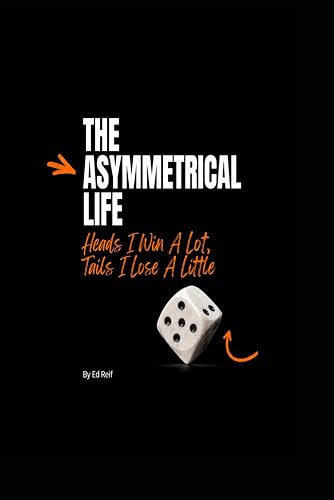
The Asymmetrical Life
You cannot control the cards. You can design the bet.

Luck Is Probability Taken Personally
Luck is not a gift. It’s a position you take.
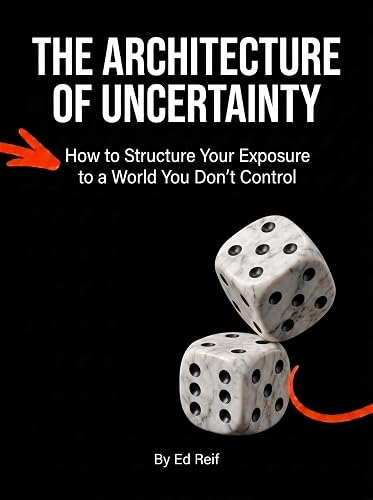
The Architecture of Uncertainty
How to structure your exposure to a world you don’t control.
Fooled by Randomness, Saved by Process
People love the word lucky because it lets them avoid the less romantic explanation: repetition, study, bankroll discipline, emotional control, and the willingness to make the right decision even when the river humiliates you.
The Poker Years belong inside The Asymmetrical Life because no straight line explains them. You can play perfectly and lose. You can play badly and win. That is the insult and the education. The work is learning not to confuse the receipt with the decision.
Results are what happened. Process is what should have happened. Decision Science at the table
From Lucky to Dangerous
Tap through the year. The transformation is not mystical. It is measured.
Beginner's Luck
The first wins feel like proof. They are not proof. They are invitation. Beginner's luck is the game giving you enough dopamine to keep studying.
Stop Worshipping Outcomes
A bad outcome can follow a good decision. A good outcome can reward a terrible one. This is where the amateur stays emotional and the serious player starts keeping receipts.
Build the Decision Engine
Position. Range. Stack depth. Pot odds. Player type. Table energy. The decision gets simpler when the inputs stop being vibes and start becoming variables.
Make Variance Boring
The real edge is not never tilting. The real edge is recovering faster than the table expects. Bad beats are overhead. Chips are the cost of doing business.
One Year Later
They will still call you lucky because that is easier than admitting you changed your relationship with risk. Take the compliment. Stack the chips. Keep studying.
Deciding in Bets, Not Wishes
Poker punishes certainty and rewards calibrated doubt.
Process > Outcome
Judge the decision by the information available when you made it, not by the card that arrived after the money went in.
Probability Dominates
Every guess can become a calculated gamble. The goal is not to eliminate uncertainty. The goal is to price it correctly.
Failure Is Data
A losing hand can be useful if it teaches you something true. A winning hand can be dangerous if it teaches you the wrong lesson.
The Edge Stack
A curated route through the poker brain: process, patience, courage, adaptation, and outcome independence.
Turn every guess into a calculated gamble. Probability does not just inform decisions; it dominates them.
Outcome Independence MindsetThinking in bets means trading urgency for edge. Stack patience, not impulse.
Failure Is Data Not DramaTurn setbacks into insights. Fail better, learn faster.
Infinite Patience Brings Immediate ResultsPlaying too many hands feels like momentum, but it leaks long-term expected value.
Luck Is Probability Taken PersonallyWe confuse luck with skill, misjudge outcomes, and fall for biases. The cure is disciplined repetition.
The Loophole: Manufacturing FocusPlayers follow predictable mental apps. Disrupt the pattern and you create the edge.
Audio from the Probability Lab
Best with headphones, after a bad beat, before you blame the universe.
Play the wreckage back.
Five podcasts. Five failure systems. One more dangerous player.
The Last Amateur
Poker TRAX 01Everyone will turn pro in 15 minutes.
A field recording about identity inflation, public expertise, and the shrinking distance between amateur energy and professional consequence.
The Bro Economy
Poker TRAX 02Crypto: the ultimate bluff economy.
Hype, leverage, confidence, and narrative liquidity. A study of what happens when the story becomes more valuable than the underlying hand.
Tilt of Destiny
Poker TRAX 03Speed, aggression, and tilt—no brakes in this high-stakes showdown.
A pressure track about momentum, emotional leakage, and the dangerous moment when force starts impersonating control.
Shattered Chips
Poker TRAX 04A journey through the chaos where fortune favors the fearless.
A post-impact recording about variance, ruin, recovery, and the discipline required to remain dangerous after the stack breaks apart.
I For An I
Poker TRAX 05Words that reveal your hand.
The tell behind the tell. Pronouns, distancing language, certainty, and the verbal fingerprints that leak the story before the cards are exposed.
Read the language around the hand.
The Pronoun “I”
“I” can function like a verbal all-in: direct ownership, personal conviction, or ego stepping forward to stabilize a shaky narrative. Listen for sudden changes in frequency, not isolated words.
The Missing Self
People sometimes distance themselves from uncomfortable actions by removing ownership: passive voice, vague actors, or “you” and “they” where “I” would normally appear.
Pace and Repair
Acceleration, hesitation, over-explanation, and sudden corrections can reveal cognitive load. The useful tell is the break from baseline—not fast or slow speech by itself.
What Is Not Said
Silence can be discipline, calculation, discomfort, or control. Read it beside timing, board texture, betting history, and the player’s normal rhythm.
Are you ready to read what is not being said?
From Acorns to Oaks / Growth Versus Grind
Do not become a bigger acorn.
The bad-beat mindset mistakes enlargement for transformation. More volume, more noise, and a larger ego are not the same as becoming structurally stronger.
Play for More
If you were willing to bet on your growth—not merely your grind—you would stop folding your future to preserve today’s comfort. The goal is not to become a shinier version of the same frightened operator.
Acorns do not win by becoming larger acorns. They change form. Poker growth works the same way: better bankroll control, stronger emotional discipline, clearer goals, process-based review, and the humility to let failure become data.
The ego wants credit for the win and an alibi for the loss. Growth wants an accurate hand history.
Black Box Manifesto / Twenty-One Signals
The ego is loud. Process is quieter.
The original rotating manifesto has been hardened into permanent field notes so every line remains readable, stable, and available for review.
The Book of the Poker Years
A field book for anyone who has ever mistaken variance for destiny.

Luck Is Probability Taken Personally: Fooled By Randomness
Luck is not a personality trait. It is probability wearing a human mask. This book turns bad beats into data, confidence into calibration, and poker into a working laboratory for thinking in bets.
The Table Was the Classroom
Poker did what every good chapter in an asymmetrical life does: it removed the illusion of control without removing the obligation to decide. That is the whole game. That is also the whole life.

Ed Reif
Author, instructional designer, sea-years survivor, war-zone teacher, and student of asymmetric risk. Poker became another operating system for the same lifelong question: how do you make good decisions when certainty is unavailable?
The cards were random. The decision was mine. Eventually I understood that was the edge.
Play the hand. Study the decision. Let them call it luck.