As Seen On TV-How I Got My SAG card
As Seen on TV / Hollywood Field Notes / Day 1–89
AS SEEN ON TVHow I Got My SAG CARD
From late-night transformation television to union vouchers, Hawaii, vampires, and live walla: the 90-day story of how showing up turned background work into a speaking contract—and a SAG card.
AS SEEN ON TV promised transformation. My version required no 1-800 number—only a deadline, a willingness to improvise, and enough resourcefulness to keep moving until the outcome changed.
Journey Map
Ninety days. Five decisive turns.
The plan did not unfold in a straight line. It moved through frustration, distance, chance encounters, and one early call time.
Day 01
The Plan Begins
I moved to Hollywood with a 90-day plan to get a SAG card and immediately met the classic catch-22: you needed the card to get the role, and the role to get the card.
Day 67
Hawaii Break
Work dried up. I was two union vouchers short, frustrated, and three weeks from the deadline. Hawaii became a break from the efforting—and a change in environment.
Day 87
The Yellow Sign
Back near Fairfax, I spotted a production parking sign and met Steve, an assistant director I knew. He offered a 5 a.m. call and a chance to show up.
Day 88
Union Background
I worked the first day as a union background performer on a Richard Elfman film with the working title The Revenant, later released as Modern Vampires.
Day 89
The Upgrade
The director asked, “Can you act?” I said yes, received speaking lines and a day-player contract, and became eligible for SAG through Taft–Hartley.
Field Note 01
Outcomes, infomercials, and applied knowledge.
Late-night television sold transformations. I was interested in the machinery underneath them: action, commitment, and results.
The call to action
Infomercials overpaid their celebrities for success and underpaid for failure. Those long-format, 23-minute commercials produced meteoric stars such as Juice Man Jay Kordich and Susan Powter with “Stop the Insanity!” Before and after you bought the product, everything pointed toward the call to action—your credit card and the 1-800 number.
I had an action plan of my own. It was not about resources. It was about resourcefulness.
Jay extolled the virtues of raw live juice and its almost Christ-like healing powers, handing out the Eucharist—carrot juice—to the audience. Militant Susan, the self-proclaimed Lenny Bruce of wellness, with her platinum buzz cut, turned water into wine with the fat-to-fit solution of eating less.

The Guru of Transformation
Awaken the Giant Within and Unlimited Power became reminders that commitment needs movement.
“The quality of my life is the quality of my communication. Success leaves clues. If I am committed, there is always a way. The past does not equal the future.”
Quoted in the original field note
Decision is the ultimate power
Yes, I have a juicer, but the IN to my SANE was Tony Robbins—the late-night guru of transformation. Prime time was the worst time for these commercials, but the message underneath the showmanship stayed useful.
In his 2006 TED talk, Tony discussed the invisible forces that move us to action: “Decision is the ultimate power. Decisions shape destiny.”
Open the TED TalkSuccess leaves clues
Tony is his own best life coach, moving from living in his car to flying in a helicopter. I could relate to the operating principle: “In life you need either inspiration or desperation.”
Preparing to change takes time. Change itself can occur in an instant. This was not one grand life transformation. It was a number of tiny actions producing immediate results.
Training for a marathon takes time. You spell love T-I-M-E. But in Hollywood, things happen at the speed of trust—and only when you trust yourself can you begin to live at full power.
Knowledge is not power. Applied knowledge is. There is no failure, only outcomes—or, as Tony would say, results.
Field Note 02
The catch-22 became a countdown.
The plan was simple enough to state and difficult enough to require improvisation.
The 90-day plan
I had a 90-day plan after moving to Hollywood in 1997—in the land of fruits and nuts, Southern California—to get a SAG card.
A guild card was a union card to work in film and television. It was the classic catch-22: How do you get a role in a feature film? You need a SAG card. How do you get a SAG card? You need a role in a feature film.
At that point in my life, enthusiasm mattered—but not enthusiasm despite failure after failure. I wanted outcome after outcome. Results.
Ask Brad Pitt
The original post used this clip as a companion to the SAG catch-22.
Field Note 03
Hawaii: the break inside the breakthrough.
Environment creates mood. Motion creates emotion. Sometimes the fastest route forward begins by leaving the map.
Aloha—if I am committed, there is always a way
As John Lennon sang “Beautiful Boy” on the radio, he was right: life is what happens while you are making other plans. I was also hearing “Let It Be”—the magic of letting go.
I had been approaching the SAG card by collecting union vouchers as a background artist. Then work dried up. I was two days of work short of the goal, with only three weeks left on the 90-day plan. I was frustrated.
“Frustration is an action signal. It means you know you could do better.”
Quoted in the original field note

Maui
A change of place became a change of state.

Environment Creates Mood
The vacation from the vacation. The pause before the next call time.
Breakdown or breakthrough
What could be better than a brain dump—going to Hawaii again, the place of recharge and inspiration? It was going to be a breakdown or a breakthrough. I took a chance on both because focus equals feelings.
“All personal breakthroughs begin with a change in beliefs.” I needed a vacation from my vacation, from my job of looking for a job, and from all the efforting. It was time for the law of least effort and the strength of loose ties to come into play.
Production people make weather
I went to the well to draw water: magical Kauai and then Maui, two weeks each. I knew somebody was always shooting a film somewhere in Hawaii. I found the Harrison Ford film Six Days Seven Nights in Kauai.
All I could do was hang around the set, eat some free food, and talk about L.A. production. I met per-diem Local 399 transportation people making a fortune on the project, along with locals who had worked on the original Hawaii Five-O. That pedigree was historically cool.
They did not go to film school to learn how to make a film. They went to film schools to rent the equipment.
Real go-getters. That is what production people are like. They can make it rain, tear down a set, and make it snow.
Field Note 04
Los Angry Cars—and the yellow sign.
Gratitude changed the emotional weather. Then a production sign changed the next forty-eight hours.

Los Angry Cars
LAX back into Los Angeles traffic—and back into the search.

Fairfax / Day 87
The tipping point arrived as a yellow location sign.
The return
I flew back to LAX—Los Angry Cars—thinking I needed to drive a truck to earn consistent money and break the $40,000 barrier. But I was grateful for the vacation, and when you are grateful, abundance has more than a chance to appear.
Shawn Mullins became my Bob Marley, singing “Everything Is Gonna Be Alright.”
On Day 87, I was heading back to my apartment off Fairfax when I noticed a man holding a yellow sign. That meant directions for local union crews to park. I knew they were shooting a movie.
I used to “spec”—speculate by simply showing up—and get gigs. I would obtain the shoot sheet from the EIDC film-permit people, drive to a location, and look for last-minute union or nonunion work. Of the seven union vouchers I collected, four came from simply showing up.
“Ninety-nine percent of life is just showing up.” In my case, it was forty percent of my economic life.
Woody Allen line, followed by my field calculation
The conversation
“You’re Ed Reif. I worked with you on set last month.”
“Steve—yes, the AD. You have a movie now?”
“No, Ed. This is a Kate Capshaw film. I’m helping the location scouts. But I’m shooting a film starting tomorrow. Early call—5 a.m. Just show up and I’ll see if I can get you a day or two.”
“I live near there. I can walk over. I’ll be there.”
I returned for work on a Richard Elfman film with the working title The Revenant. Later, it was released as Modern Vampires.
Richard Elfman Film ReferenceField Note 05
Modern Vampires and the Taft–Hartley moment.
Day 88 was background work. Day 89 was a contract, speaking lines, and a thirty-day clock to join the union.
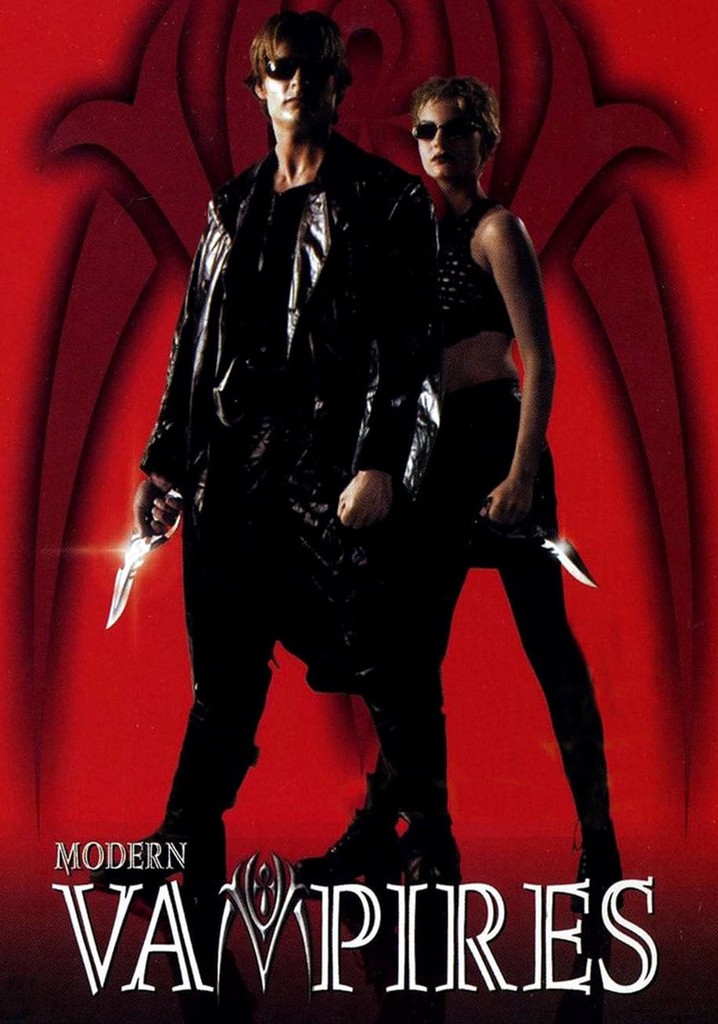
Modern Vampires
https://images.justwatch.com/poster/42377843/s718/modern-vampires.jpg1998 horror-thriller directed by Richard Elfman.
Production Credits
The company I walked into
The original caption listed a remarkable cast:
- Casper Van Dien
- Natasha Gregson Wagner
- John Fleck
- Ed Reif
- Kim Cattrall
- Stephen Porter
- Craig Ferguson
- Jason Ross-Azikiwe
- Udo Kier
- Natalya Andreychenko
- Rod Steiger
- Robert Pastorelli
Day 88 to Day 89
On Day 88, I worked as a union background performer. On Day 89, Rick, the director, gave me an audition and asked, “Can you act?” I answered affirmatively: “Yes.”
I was upgraded to day player with a contract. I switched my union background voucher for actor John Fleck’s day-player contract. John had another project in New York and had to leave while we were shooting overtime.
Overtime was golden time. In a 12- or 14-hour union gig, you could double or triple the money. I was loving it: my own trailer, good food, beautiful people—living the dream.
“Lucky dog.”
Steve, the AD who had connected me with the job the day before, stood there with his clipboard and headset, rolling his eyes.
“Lucky dog. You spec’d a feature film, got a union voucher, and then upgraded to a union contract. I have never seen that.”
I had been Taft–Hartley-ed.
Taft–Hartley / Entertainment Context
As explained in the original post: when a nonunion film or television actor becomes a principal performer by saying a line, that performer becomes immediately eligible to join the Screen Actors Guild and is covered under the production’s SAG contract for thirty days. After that period, the performer must join SAG or stop working on union productions.
The Shoot
The past did not equal the future.
I had never taken an acting lesson. The sound man and the director gave me the first two.
The line
“I’m an attorney. You’ll never get away with this.”
Then the vampires—Kim Cattrall, before Sex and the City, and Robert Pastorelli—chopped off my head and ate my brains. Yuck.
I was so excited and so amped on craft-services espresso that, in close-up, I was smiling and screaming at the same time.
Lesson 01
The sound man
With no classical training—not one acting lesson—I received the first:
“Ed, this is a microphone. If you whisper, it will project more feeling in your face.”
Lesson 02
The director
Then my regional accent kicked in. Rick, smoking an unlit cigar, gave me the second lesson:
“Let’s go again. Less New York.”
Lesson 03
Stanislavsky, broken
Konstantin Stanislavsky’s rule was: Love the art in yourself, not yourself in the art.
I broke it. I loved myself in the art.
The new deadline
Now I had thirty days to pay the union dues—a new feeling. But as Tony Robbins said, focus equals feelings. I had a feeling I could sell my Super Bowl ticket or tickets: Denver versus Green Bay in San Diego.
Archive Scene
American History X and the walla group.
The background was not silent. We made the crowd noise live—and this is my scene.

American History X
The 1998 drama directed by Tony Kaye, starring Edward Norton, Edward Furlong—and (Ed)ward Reif.

Nazi Buddy Storm Trooper No. 4
Venice High School in the badlands of Los Angeles.
What is walla?
In film and television, walla is the sound effect that imitates the murmur of a crowd in the background. A group of actors is usually brought together during post-production to create that murmur. We did it live.
A lot of actors do not like shaving their heads. Since I already did, I received plenty of prosthetic work on Galaxy Quest, made a mockumentary for the Sci-Fi Network, and worked as a series regular Cro-Mag soldier on Jerry O’Connell’s Sliders.
Here I am as Nazi Buddy Storm Trooper No. 4. Watch my scene above for the live walla:
“Hell no! F no!”
Companion Media
From background to foreground
The obsolete Metacafe Flash player has been replaced by your surviving YouTube scene. The original walla post and Sci-Fi mockumentary remain as companion chapters in the acting journey.
Production Reality
The heat behind the frame
That is what I liked about film work at the edges: the details were never abstract. Haircuts mattered. Presence mattered. Showing up mattered. Sometimes you were not the star of the frame. You were the heat behind it, the pressure in the room, the human murmur that made the scene feel real.
Final Reflection
The outcome was not luck. It was contact with the field.
Despite the camaraderie, the laughs, the jollies, and the tribal feeling that attends any acting project, the profession remains notoriously lonely. Friendships are intense but brief. When the gig ends or the curtain comes down, you can find yourself back home staring at your phone and wondering whether any of it really happened.
Memories are short. Time moves on. Fame is transitory.
But the operating lesson stayed: the plan creates direction, the environment changes state, and showing up creates contact with opportunities that cannot find you while you are standing still.
Resources help. Resourcefulness gets you through the door.